
Choosing curtain fabric starts with the room, the finished heading and the way you want the curtains to hang. Check weight, drape, opacity, pattern repeat, fabric width, lining and care guidance before choosing by colour alone.
A fabric that looks attractive as a small image may behave very differently across a full window. Tall curtains need enough body to hang cleanly, Roman blinds need stability, and patterned designs may require additional metreage for matching. The individual product specification should confirm whether the fabric is suitable for curtains, blinds or both.
Reviewed and updated by The Millshop Online fabric team: August 2026.
Quick curtain fabric comparison by room
| Room | Main priorities | Useful starting point |
|---|---|---|
| Living room | Drape, appearance and coordination | Medium or heavier curtain fabric, linen look, weave or suitable velvet |
| Bedroom | Privacy and light control | Curtain fabric combined with standard or blackout lining |
| Kitchen | Practical care and distance from splashes | Stable medium or lighter fabric suited to curtains or Roman blinds |
| Dining room | Colour, pattern and evening appearance | Printed linen look, stripe, floral, leaf or structured plain |
| Large or draughty window | Fullness, weight and compatible hardware | Substantial face fabric with suitable lining or interlining |
This is a starting point rather than a fixed rule. Browse curtain fabric by the metre and compare the exact product width, weight, repeat and recommended uses.
What makes a good curtain fabric?
A good curtain fabric hangs attractively, works with the chosen heading and suits the practical requirements of the room. It needs enough stability to be made accurately without becoming unnecessarily stiff or heavy.
The fibre name alone does not decide the result. Linen, cotton, polyester, velvet and blended fabrics can all work for curtains when the particular construction and weight are appropriate. A sample is the best way to judge texture, flexibility and how the fabric reacts to light.
How fabric weight changes curtain drape
- Lightweight fabrics create an airy, relaxed effect but may need lining for privacy and body.
- Medium-weight fabrics are versatile for many full-length curtains and Roman blinds.
- Heavy fabrics create a fuller and more substantial look, but require compatible headings, poles and tracks.
GSM describes mass per square metre; it does not automatically prove warmth, durability or suitability. Our fabric weight guide explains GSM, gauge and durability measurements.
Should curtain fabric be lined?
Most full curtains benefit from lining. It can improve the hanging finish, protect the back of the face fabric, increase privacy and help the curtains feel more substantial.
- Standard lining provides a neat reverse and improves body.
- Blackout lining is useful where stronger light control is needed, particularly in bedrooms.
- Thermal lining is designed to add insulation as part of the finished curtain.
- Interlining sits between the face fabric and lining, adding body and a more luxurious finish.
Choose the layers together because the added weight affects the heading and hardware. Read our curtain lining and interlining guide, then compare curtain linings and blackout linings.
How heading style affects the fabric choice
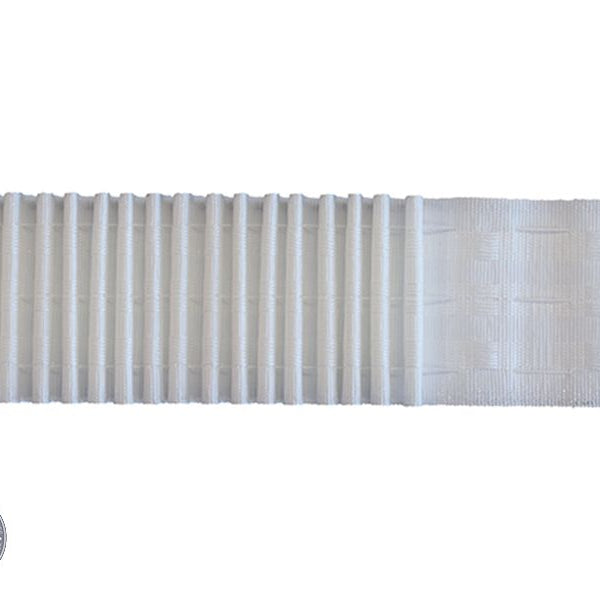
Pencil pleat, eyelet, pinch pleat and wave headings create different fullness and place different demands on the fabric. A soft linen-look material may produce a relaxed heading, while a structured weave can make pleats more defined.
The heading also changes how much fabric is required. Before ordering, use the curtain heading guide and confirm the recommended fullness for the chosen tape, rings or track system.
Which patterns work best for curtains?
Pattern scale should be judged against both the window and the full curtain drop:
- Large florals, leaves and art deco patterns often work well on tall curtains where the full design can be seen.
- Small florals, checks and ticking stripes can suit compact windows, cottages and Roman blinds.
- Vertical stripes emphasise the height of a curtain but need accurate alignment.
- Bird and botanical prints create a decorative focal point and should be sampled to check their true scale.
See the curtain fabric pattern guide for a more detailed comparison.
Why fabric width and pattern repeat matter
Fabric width helps determine how many vertical widths are needed across the pole or track. The vertical pattern repeat then affects the length of every cut drop. Large repeats generally create more matching waste than plain or small-scale fabrics.
Use our curtain fabric calculator guide to work through pole width, fullness, fabric width, cut drop and pattern repeat with a worked example.
Linen, cotton, woven or velvet?
| Fabric type | Typical appearance | What to check |
|---|---|---|
| Linen or linen blend | Natural texture and relaxed drape | Movement, creasing, opacity and lining |
| Cotton or cotton blend | Clear print and versatile handle | Weight, shrinkage guidance and intended use |
| Woven furnishing fabric | Texture and more structure | Finished weight and suitability for headings |
| Velvet | Full, soft and colour-rich | Pile direction, weight and whether curtains are an approved use |
Our linen versus cotton curtain fabric guide compares the two popular options in more detail.
Can upholstery fabric be used for curtains?
Sometimes. A multi-use or upholstery fabric can make excellent curtains when it has a suitable handle and the product specification approves curtain use. Other upholstery fabrics may be too stiff, bulky or heavy for the desired heading.
Do not assume a high Martindale result makes a fabric suitable for windows. Abrasion resistance and curtain drape are different properties. Where the same print is available on curtain-weight and upholstery-weight basecloths, choose the version made for the project.
What to check on a curtain fabric sample
- View the colour in daylight and evening light.
- Hold the sample vertically to assess drape rather than leaving it flat on a table.
- Place it against the wall colour, flooring and nearby furniture.
- Check how much light passes through it.
- Confirm the scale and direction of the pattern.
- Compare it with the proposed lining.
- Read the care and intended-use information before ordering.
Curtain fabric ordering checklist
- Measure the installed pole or track and finished drop.
- Choose the heading and fullness.
- Check usable fabric width and vertical pattern repeat.
- Decide on standard lining, blackout lining or interlining.
- Confirm whether the fabric is suitable for curtains, blinds or both.
- Calculate the metreage and round up rather than down.
- Order a sample before buying the full length.
Frequently asked questions
What is the best all-round curtain fabric?
A stable medium-weight furnishing fabric is a versatile starting point, but the best choice depends on the heading, window size, lining and desired appearance.
Can I use unlined curtains?
Yes, where privacy, light control and protection are less important and the fabric is intended to be used that way. Lining usually creates a fuller and more finished result.
What fabric is best for Roman blinds?
A stable medium-weight curtain or multi-use fabric often folds neatly. Avoid assuming that every loose, stretchy or very heavy fabric will work with the blind system.
Should curtains match the upholstery?
They can coordinate without being identical. Repeating one colour or using related patterns and textures usually creates a more flexible scheme than covering every surface in the same design.
The best curtain fabric balances appearance with construction. Start with the room and heading, compare the specification carefully, calculate the pattern repeat and order a sample before committing to the full metreage.